
Significance of the Vendidad
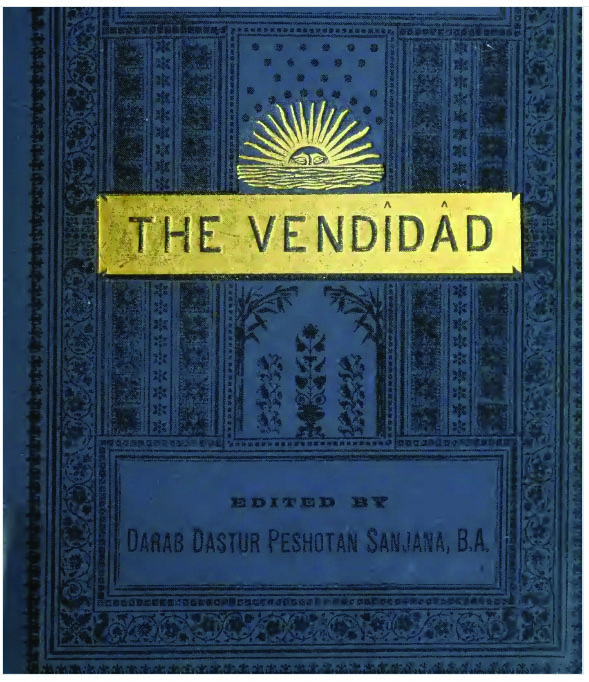
A Parsi Times reader recently asked whether the Vendidad is a philosophical poem like the Gatha or prose enshrining an ancient ‘Zoroastrian Penal Code?’ He also wanted to know if it was simply a textual commentary or a sacred religious ritual? Finally, he was curious about why it is performed after midnight and considered as spiritually meritorious to perform the Vendidad ceremony in the memory of a dear departed.
Focus on Purification
While the Gatha are philosophical verses that were composed and sung by Asho Zarathushtra himself, the Vendidad is a later text, focusing primarily on laws regarding the purification of the body and soul and handling of dead matter (considered polluted). Akin to any ‘Penal Code’ the Vendidad outlines specific penalties for various actions that are considered as gunah (sinful) or actions giving rise to ritual impurity. These penalties often involve specific punishments or remedial acts, like the Patet (affirmation of repentance) or specific acts of atonement. While it functioned centuries ago as a religious penal code for the Zoroastrian community, the penalties outlined are often of a ceremonial nature. Therefore, the Vendidad cannot be equated to criminal law as defined in modern statutes like Penal Codes.
Controversial and Criticized
Among ancient Zoroastrian sacred texts, the Vendidad is probably the most significant, both historically and liturgically and yet, it has been controversial and often dismissed as an outdated ‘Zoroastrian Penal Code’ or the work of Magi priests obsessed with imaginary demons and magic.
Among the earliest critics of the Vendidad was Father Dr. John Wilson (1804–1875), a Scottish missionary and founder of Wilson College in Mumbai. In 1883, he published a booklet portraying the Vendidad as overly concerned with ritual impurity rather than morality. His views influenced Parsis who got increasingly drawn to Western thought. In 1839, two Parsi students, Dhunji Naoroji and Hormasji Pestonji, even converted to Christianity. Although Wilson’s arguments were later challenged and refuted, the impact of his critique lingered, shaping perceptions and creating lasting doubts within sections of the Parsi community for many years.
The Vendidad is historically significant first as it’s the only Nask or volume out of the original twenty-one volumes of the Avesta which has survived to this date in entirety. The twenty-one volumes were based on the twenty-one words of the Yatha Ahu Vairyo prayer (first volume was called Yatha, the second was called Ahu and so on). With time, twenty volumes have disappeared or can be found scattered only in fragments. We know about these volumes because the Pahlavi Dinkard (a text compiled in 9 AD) provides a summary of all twenty-one volumes, including the Vendidad (believed to the nineteenth of twenty-one Nask).
What is the Vendidad
The Vendidad is a book of the Zoroastrian religious code and not a work of philosophy nor a liturgical manual. It broadly covers religious teachings and religious observances, practices, punishments and atonements. It has twenty-two chapters which are referred to as Fragard or Pargarad. These chapters are of varying length and focus largely on laws of sanitation.
Chapter Highlights:
Chapter 1: Iran’s sixteen cities created by Ahura Mazda, to which Ahriman (the destructive spirit) brought various calamities.
Chapter 2: How Shah Jamsheed expanded the then known world in pre-historic times.
Chapter 3: How earth rejoices with happiness (because of agriculture or industriousness) or feels tormented when dead bodies are buried in it.
Chapter 4: Contracts and promises, and consequences of not keeping a promise.
Chapter 5: Nasu or the force of decay and decomposition.
Chapter 6: Merits of agriculture, keeping the ecological balance and hygiene.
Chapter 7: Ancient medicine; infections caused by dead matter and containing harm emanating from it.
Chapter 8: Various purification rituals including Bareshnum.
Chapter 9: Bareshnum (ceremonial ritual purification) and other laws of purification.
Chapter 10: Spiritual and protective benefits of reciting prayers.
Chapter 11: Specific prayers for specific purposes.
Chapter 12: After-death rituals
Chapter 13: Different dog types and their care.
Chapter 14: Udra (otter/water-dog) and it’s work in Nature.
Chapter 15: Various sins (including forced abortion).
Chapter 16: Segregation for women during menstrual period.
Chapter 17: Disposing Nasu like hair and nails.
Chapter 18: Qualifications of a priest.
Chapter 19: Describes heaven, hell and how Ahriman tried tempting even Zarathushtra.
Chapter 20: Forms of healing with prayers, herbs and knife (surgery).
Chapter 21: Healing power of rain on earth.
Chapter 22. How Divinity Airyaman heals.
Significance of Vendidad
In addition to the recitation of the Vendidad text, the Yasna (Ijashne) and Visperad are also intertwined during the ceremony. Aimed at destroying negative forces of darkness and evil, it is performed post-midnight when forces of darkness and evil are heightened (in Ushahnin geh), without a break for 6-7 hours at an Agyari or Atashbehram. It requires great mental and physical stamina from performing priests.
Usually performed in memory of a dear departed one, preferably on the fourth day after death (Chahrum), the Vendidad can also be performed on any day after the paidast. Sometimes, due to shortage of priests, the ceremony is performed even years after the person’s death. When performed in memory of a dear departed, it’s believed that the spiritual merit of the ritual benefits the departed soul, and can be conducted once or repeatedly in their memory.
The Vendidad ceremony is also among rituals necessary for consecrating an Atash ādarān or Atashbehrām; also performed when a priest is initiated as ‘Maratab’ or for concluding the Nirang-din ceremony.
Vendidad–Sādeh
When families sometimes face sudden misfortunes – financial loss, prolonged illness or repeated accidents – and attribute these to negative energy, the Vendidad Sadeh can be recited at home or work by a priest. However, it is not a formal ritual, as higher liturgical ceremonies must always be performed in consecrated fire temples like Agyari or Atashbehram.
For the Vendidad Sadeh, the house or workplace should be thoroughly cleaned and a fire should be kept burning. In the Ushahnin geh, after midnight, the priest recites the Vendidad text after performing the Kushti and Farazyat prayers, Ushahnin gah and the khshnuman (invocation) of Sarosh Yazad. For devout Zoroastrians, the Vendidad remains a vital cultural and ethical guide. Though many mandates are overlooked today, it continues to remind followers to reject all forms of pollution and live in harmony with nature.
The Vendidad is also a text which encourages devout Zoroastrians to attain peace, prosperity and progress by living a righteous, prayerful and industrious life, as is reflected in the Vendidad’s 3rd chapter:, where Zarathushtra questions: “O Maker of the material world, thou Holy one! Which is the place where the Earth feels most happy?” And Ahura Mazda answers: “It is the place where on the faithful erects a house, offers worship within, with cattle, with a wife, with children, and good herds within; and wherein afterwards, prayer continues to thrive, the cattle continue to thrive, virtue continues to thrive, fodder continues to thrive, the dogs continue to thrive, the wife continues to thrive, the child continues to thrive, the fire continues to thrive, and every blessing of life continues to thrive.”
…. Noshir Dadrawala