
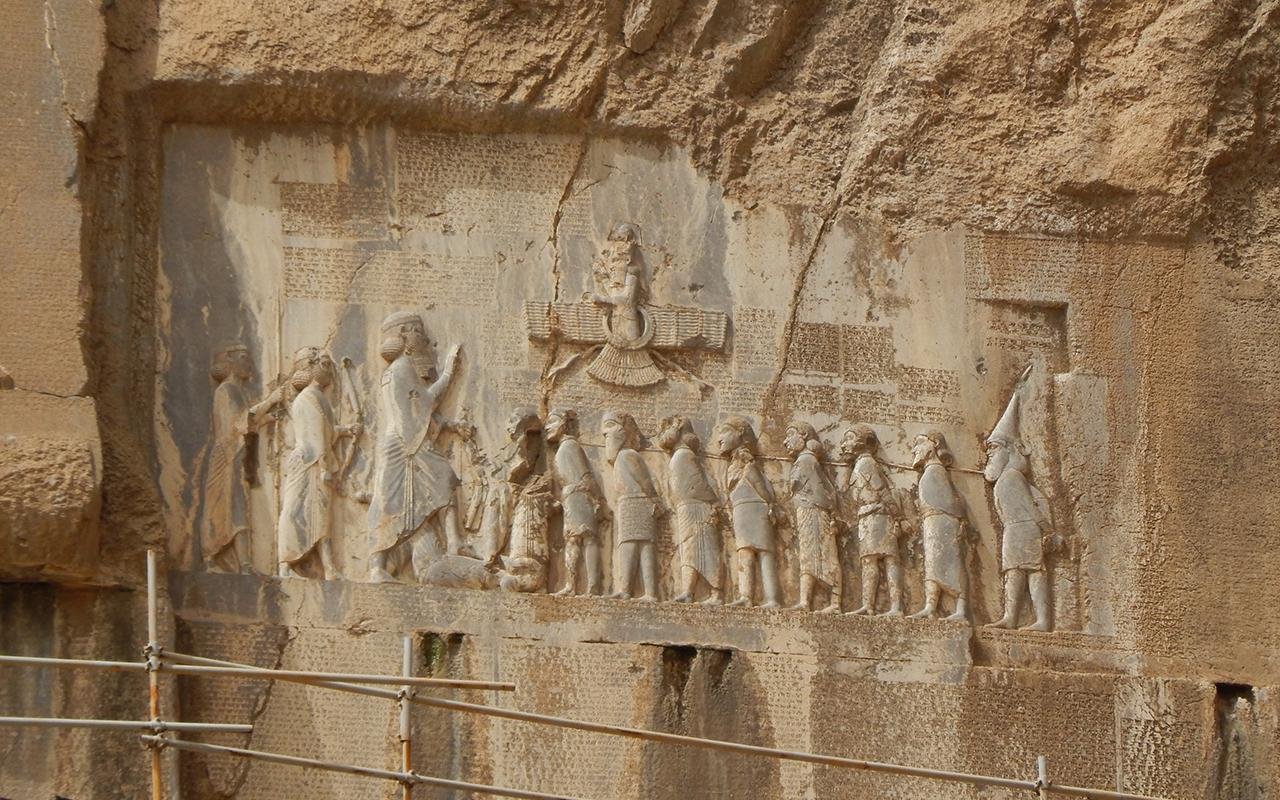
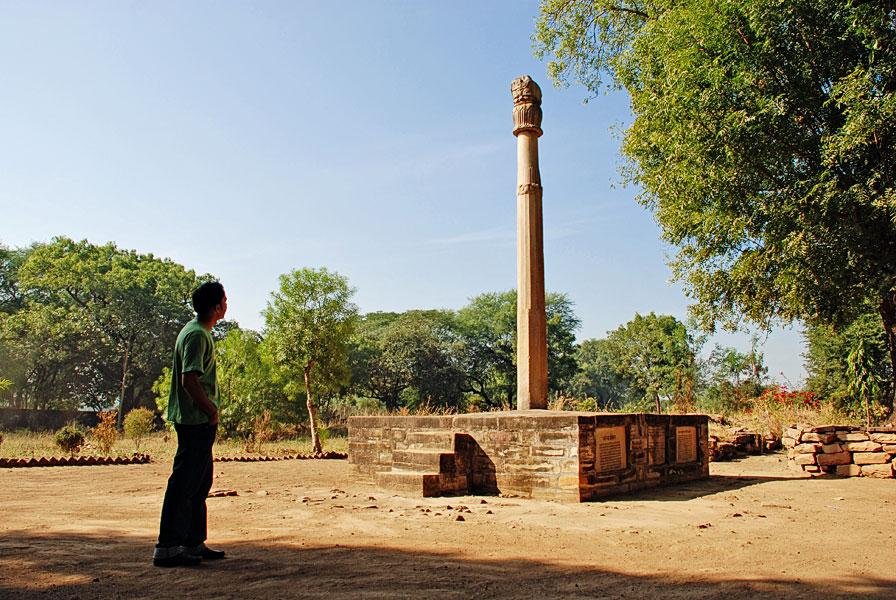
Central Asia is often described through the movement of empires, armies, and trade routes, but the study shifts attention to writing itself. According to the research, the surviving texts from this period were mostly written in imperial languages rather than local spoken ones. Under Achaemenid Persian rule, administrative texts were commonly recorded in Aramaic and Elamite. Later, after the conquests of Alexander the Great and the rise of Hellenistic kingdoms, Greek became widely used in official and public writing. In regions linked to the Mauryan Empire, Prakrit also entered the written record.
This does not mean local communities suddenly changed their everyday speech. The study argues the opposite. People in Central Asia likely continued speaking local Iranian and Indo-Aryan languages while using foreign languages for administration, trade, and formal writing. In other words, the language people wrote was often different from the one they spoke at home.
The evidence comes from inscriptions, administrative documents, and archaeological finds from sites across the region. Some of the earliest surviving written materials from Central Asia date to the fourth century BCE and come from Bactria and Arachosia. These records help show how Persian imperial systems operated far from their political center. The study notes that Aramaic served as a practical administrative language across the empire because officials from many regions needed a common written system.
Greek later followed a similar path. After Alexander’s campaigns in the late fourth century BCE, Greek speakers appeared in larger numbers in Central Asia. In places such as Ai Khanoum, archaeologists have uncovered inscriptions and written material showing Greek was used for public display, administration, and elite culture. Yet Greek writing in the region did not always signal Greek ethnic identity. The study stresses that language and identity should not be treated as identical categories. A person writing in Greek was not necessarily Greek by origin or self-identification.
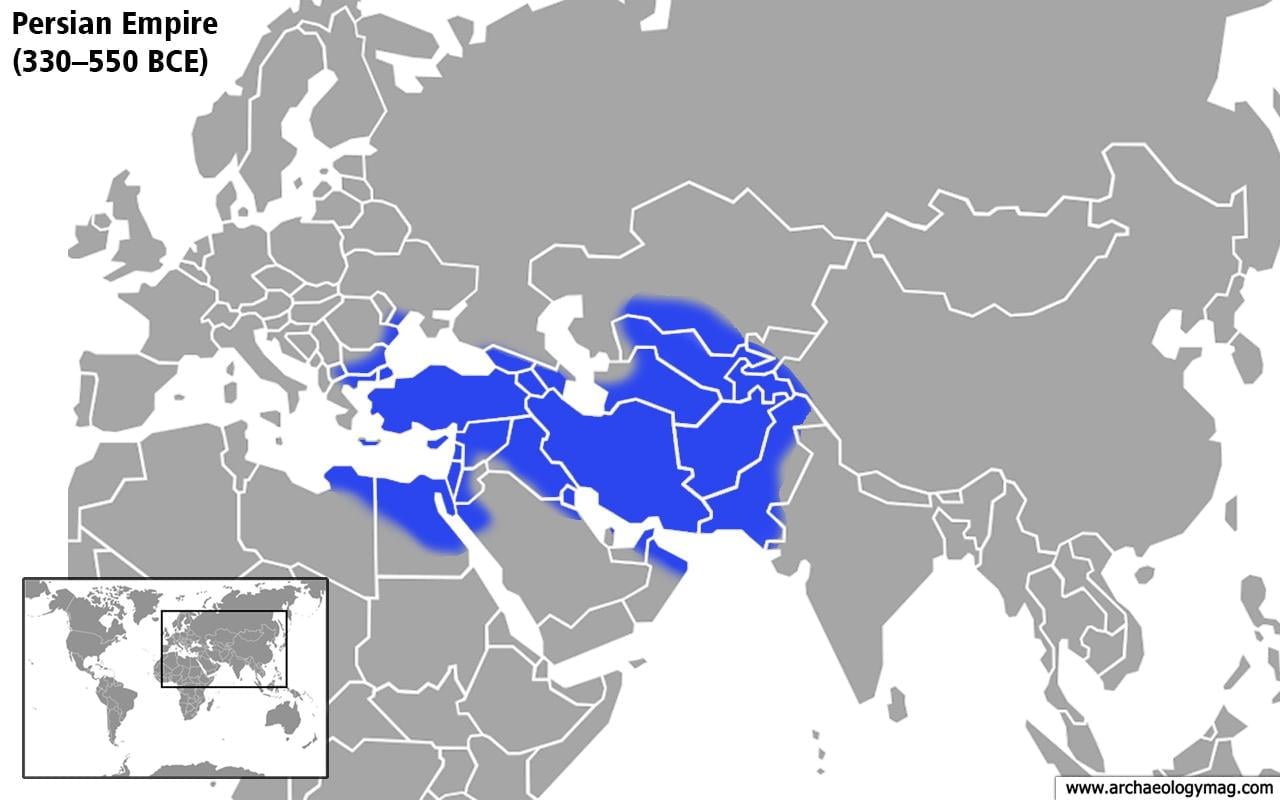
By tracing these patterns, the study presents ancient Central Asia as a multilingual region shaped by long-term contact between Persian, Greek, Indian, and local traditions. The written record is incomplete and shaped by what happened to survive in dry climates, collapsed archives, and archaeological excavations. Even so, the surviving documents offer a rare view of how empires influenced writing practices while local languages continued beneath the surface.
The study suggests ancient Central Asia was not defined by a single language or script, but by constant adaptation. Writing systems moved with empire, but local societies reshaped them for their own needs over time.
Greetings. I am commenting on a conversation between my friend, Mr. Parsipour, and me.
Mr. Parsipour wrote:
Aryamonaad Sam Ahura, whatever you say, my friend, although some of the very interesting things you say don’t have a sound scientific basis … (and when did I say the Aramaic language is the root of the Persian language? Who says Persian is an ‘original / base’ language to begin with? …)
I replied:
Not you, but because the oldest Bible is written in Aramaic. Since Armenia was a state of Persia, according to some biblical scholars, the Persian language was a branch of Aramaic!
The first human being to ban cannibalism amongst the Cro-Magnon man was Qiu Mars. Around 40,000 years ago, the Pish-Daddi Persians called stars *Astarah*, and today, in English, a star is still called a star. The Persian language, since it is the oldest, is divided into three eras: the Old Persian or Old Pahlavi, the Middle Persian, Middle Pahlavi, or the Darri Persian. and the new Persian or Farsi. The old Persian language began around 40,000 years ago and ended at the end of the Jamshidian era. Middle Persian, or Darri Persian, began in the era of Fereidoun of Farokh around 10,000 BC, and New Persian, or Darri Farsi, began in the Islamic era 1400 years ago. That is why the Persian language is the mother language of all daughter languages on Earth. Based on the *Epic Book of Kings*, the Shah-Nameh by Ferdowsi (960 – 1040 AD), which is the soundest scientific basis for existing knowledge about ancient history, geography, anthropology, archaeology, philology, and linguistics, is available worldwide without GPS access! If Ferdowsi accurately mapped out the world, then how else could a man who was living in the city of Toos or modern-day Mashhad in the northeast corner of Iran, know about the name and the geographic locations of the Canary Islands and the Sea of Britain, the North Sea, and the Sea of Adrian in the West, and the Japanese Islands and the Sea of China in the East over 1000 years ago? Therefore, there must be truth to Ferdowsi’s writing: around 12,000 BC, a branch of the Persian lords named Farahoon migrated from the Kool E Farah (meaning the hill of knowledge) in the Zagros Mountains in Southwest Iran to Egypt, where they founded the Egyptian civilization along the Nile River. The Persian tribe of Farahoon still exists in Egypt, and the name of the Pharaoh of Egypt has its roots in the name of the Farahoon tribe, which, in the accents of the western part of the Iranian Plateau, is transformed to Pharaoh. And always the Pharaoh and the Aziz or Iziz of Egypt, and also the Caesar of Rome, the Maharaja of India, and the Khagans and the Phaghfours of China, all had to be descendants of the Qiu Mars. And they all wrote letters and communicated with each other in Old Persian or Old Pahlavi, because from the time of Jamshid e Jam until around 300 years ago, the Persian language was the international language, just as English is today. Ferdowsi wrote that all the major empires, like the Pharaohs, the Caesars, the Maharajas, and the Khaqans, exchanged letters on a silk scroll in the language of Old Pahlavi or Old Persian. The old Persian language was the mother language of all the world’s daughter languages. And ever since the era of Jamshid e Jam, the government of Persia, Iran, or the Aryans has been the government of * the ancient World Order *
به دیبا نوشتند بر پهلوی * چنان بوده بود نامه خسروی
April/ 18/2026
A. Sam Ahura
Gaber Gothic Zoroastrian Magi