
At Mumbai’s Iran League, Almut Hintze Explains Why Evil Exists In Zoroastrian Thought
The SOAS scholar Prof. Almut Hintze drew on ancient scriptures, ritual and the tradition of physician-priests to explain how Zoroastrianism understands illness and healing.
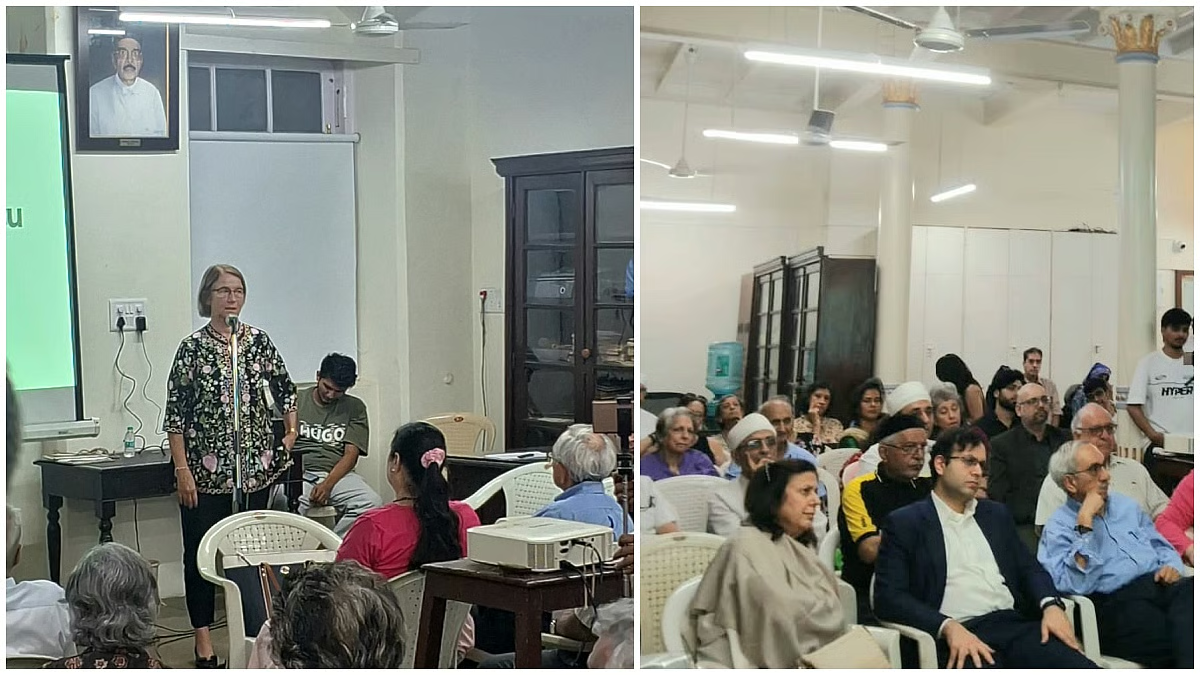
Where Evil Comes From
In her illustrated talk, The Nature of Good and Evil in Zoroastrianism, Hintze, a professor at SOAS University of London, drew on the Avesta, the sacred texts of Zoroastrianism, and later Middle Persian writings. The oldest parts of the Avesta are thought to date to the second millennium BCE.
She described Ahura Mazda as the supreme deity and creator of both the spiritual and material worlds. Angra Mainyu, she explained, is an uncreated force that can damage the material world but cannot create one.
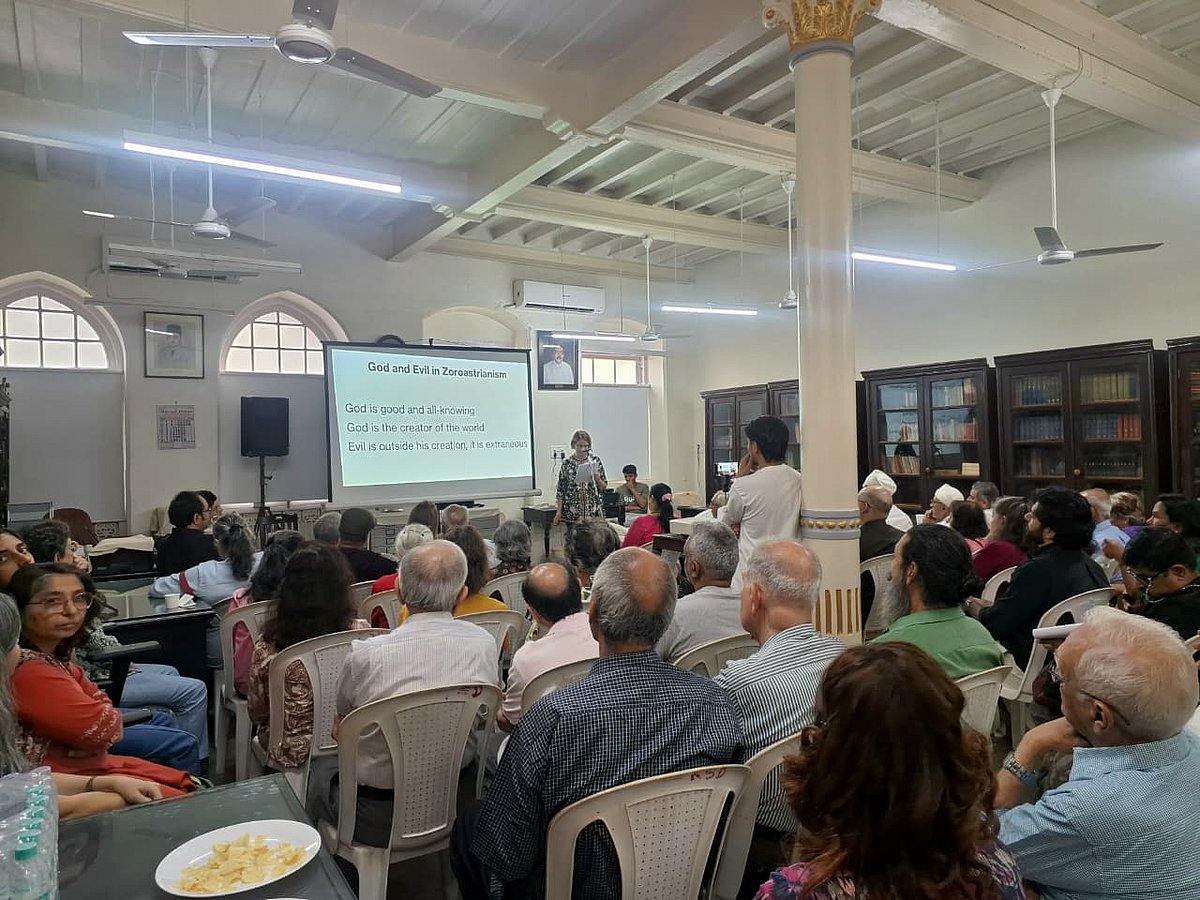 At her illustrated talk at Mumbai’s Iran League, Prof. Almut Hintze explains a central idea in Zoroastrian thought: evil enters an originally good creation from outside. | Iran League
Mantras, Medicine And The Physician-Priests
In footage of the Yasna ritual, a priest recited Avestan verses as he struck the sides of a mortar with a pestle in each of the four directions. Hintze explained that the ringing blows accompanied words directed against destructive forces.
Sacred words also had a place in healing. Hintze said Zoroastrian texts describe three ways of treating illness, using a knife, medicinal plants or a spoken mantra. The texts give the mantra the highest place among the three. She also spoke of two physicians, including a surgeon, who combined medical practice with their duties as Zoroastrian priests.
During the discussion that followed, Hintze suggested that contact with ancient Persia may have influenced the development of some Jewish ideas about the end of time. She also suggested that the idea of bodily resurrection was articulated in Zoroastrianism before it appeared in Christianity and may have influenced Christian belief.
In the Zoroastrian account she outlined, a future saviour will ultimately render evil powerless. Until then, she said, people have a part to play through their thoughts, words and deeds. She pointed to the Zoroastrian tradition of charitable institutions that provide housing, education and medical care. In the framework Hintze described, easing someone’s suffering is itself a way of diminishing the power of evil.