
Remembering a reclusive post-war modernist who painted Mumbai
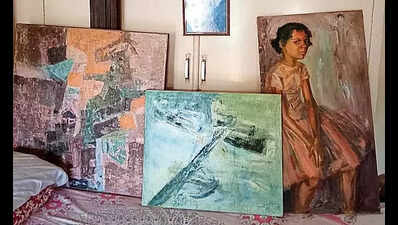
In a modest Parsi household in Andheri, where the pagri-clad patriarch passed away last month, there are no portraits of the departed, only ones painted by him. Propped on a narrow cot is a six-decades-old painting of a young girl named Firooza, alongside two landscapes evoking Google Maps: Naval Jijina‘s signature aerial views from the 1960s, conjuring the sensation of flying. “He had never been inside a plane though,” says his wife, Gool. “Rather, he was on a higher plane than ordinary…
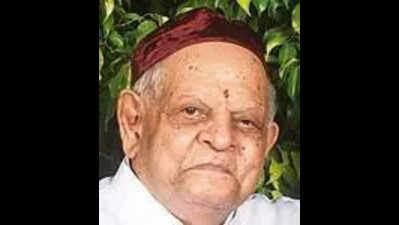
“Jijina—a Zoroastrian priest and reclusive post-war modernist—died on April 22 at 96, leaving behind a legacy of vibrant canvases that stretch from Andheri to America. A contemporary of Raza and Gaitonde, the Sir JJ School of Art alumnus produced works now housed in homes and institutions worldwide, from the Singapore Parsi Community Hall to Mumbai’s Godavra fire temple in Fort, where he once served as a priest.”His life was full of hard knocks,” Gool says of her husband, born in 1929 and raised in a Surat orphanage after his mother died when he was a toddler. Though he trained to be a priest, his soul was drawn to colour. “For seven and a half years, they never raised my salary beyond 45,” he once said of his time at a Mumbai agiary.
Eventually, he followed his boyhood passion for sketching, studying at Nutan Kala Niketan in Girgaum and later, Sir JJ School of Art where he faced initial rejection.”They said there was no spark,” he recalled in an interview. Under abstractionist Shankar Palshikar, he found it.He sketched commuters at CSMT’s outstation platforms, and lessons on composition from the hard-to-please Palshikar turned his tram tickets into miniature canvases. As a tabla player, Jijina found rhythm in hues. Inspired by artist Paul Klee’s words—”Colour is optimism”—he learned to blend even the most contrasting shades, says Gool, who met her husband through music.
A man BLESSED BY GOD, his Spirit, his Skill, his Resolution